Commercial Water Heater Installation and Replacement in Boerne: What to Know
Commercial hot water is one of those systems nobody notices until it fails. In a business, that failure gets expensive fast. Staff cannot wash properly, tenants complain, cleanup slows down, and any operation that depends on reliable hot water starts scrambling. In Boerne, the practical side of replacing or installing a commercial water heater goes beyond the equipment itself. You have city permitting and code compliance to think about, licensed plumbing work under Texas rules, and the day to day reality of keeping a business running while the job gets done.
If you own, manage, or maintain a commercial property in Boerne, the smartest approach is to treat a water heater project as a building system project, not a quick swap. That sounds obvious, but in the field, rushed replacements are where the headaches usually start. The unit may be changed, but if planning was thin, the real problems remain. Poor access, mismatched connections, overlooked code issues, or a weak maintenance record can turn one emergency into a string of service calls.
Why commercial replacement is different from a simple repair
A commercial water heater job usually carries more moving parts than people expect. In many buildings, the water heater is tied closely to operating hours, sanitation routines, tenant needs, or customer-facing services. A restaurant, office, salon, medical space, or multi-use commercial property may all use hot water differently. Even when two buildings look similar on paper, the real demand can be very different.
That is one reason experienced plumbers tend to ask a lot of questions before recommending replacement. They want to know whether the current system failed suddenly or has been limping along for months. They want to know if complaints happen at the same time every day, if hot water runs out during peak use, or if utility bills have shifted. They also want to know whether the building has had recent leak issues, because a water heater replacement does not fix waste from other plumbing problems.
In practice, some owners call only after a total outage. Others replace proactively after repeated repairs. Both situations happen, but the second usually gives you more control. You can schedule around business hours, deal with permitting properly, and avoid a rushed choice that is based only on what is available that day.
What Boerne requires before the work starts
In Boerne, permitting and code compliance are part of the conversation. The city has official oversight for plumbing, mechanical, fuel gas, and energy work, and it issues permits for both residential and commercial projects. Contractor registration is required for work in city limits. That matters because a commercial water heater replacement often touches more than one category at once. Even when an owner sees it as a straight plumbing job, the city may view parts of the project through several compliance lenses.
Boerne also uses the 2021 International Plumbing Code along with related 2021 ICC codes. For owners, the main takeaway is not that you need to memorize code sections. It is that replacement work should be approached with current code compliance in mind, not with the assumption that the old setup automatically passes as-is forever. Existing conditions in older buildings can be full of surprises. You may open a utility room expecting a straightforward replacement and discover that access, venting, piping arrangement, or related components trigger a larger discussion.
That is where experienced commercial plumbing judgment earns its keep. A plumber who works regularly in a regulated environment will not treat permit requirements as a nuisance or a last-minute detail. They will factor them in early, along with contractor registration and city expectations. That helps avoid the classic problem where equipment is on site, tenants are waiting, and someone suddenly realizes paperwork or inspection timing was overlooked.
Why licensing matters more than ever on commercial jobs
Texas plumbing work is regulated by the Texas State Board of Plumbing Examiners. Licenses renew annually, and the state distinguishes between different license roles. A Journeyman Plumber may install, change, repair, service, or renovate plumbing under a Responsible Master Plumber. The Responsible Master Plumber is the individual licensed to offer and contract plumbing work to the public.
That structure is worth understanding if you are hiring for a commercial water heater installation in Boerne. Commercial owners are often under pressure to move quickly, and that is exactly when shortcuts start looking tempting. Someone may say they can “handle it,” especially if they have done maintenance work around the property before. But commercial hot water work is not a place to improvise. You want a properly licensed plumbing company operating under the right structure, especially when permits, inspections, fuel gas considerations, and code compliance may all be in play.
This is also where online searches can be misleading. Typing plumber near me into a search bar may bring up plenty of names, but proximity is not the same thing as commercial readiness. For this kind of project, local presence helps, but licensing, commercial experience, and the ability to navigate city requirements matter more.
What a good pre-installation conversation sounds like
The best commercial water heater projects usually begin with a careful site conversation, not a rushed price over the phone. A solid plumber will want to see the existing setup and understand how the building actually uses hot water. That on-site look helps answer the questions that really affect the project.
First, is the issue truly the water heater, or is it one piece of a wider plumbing problem? A building can have weak hot water performance because of leaks, circulation issues, fixture demand patterns, or system wear elsewhere. Second, what does the replacement need to accomplish? Restoring basic service is one thing. Correcting an undersized or poorly arranged setup is another. Third, what limitations does the space impose? Utility rooms in commercial properties are not always generous, and older buildings can be awkward to work in.
A seasoned plumber also thinks about disruption. Can the work be staged to minimize downtime? Does the property need temporary scheduling changes? Are tenants or staff going to be affected by shutoffs? Those are not glamorous questions, but they often determine whether the project feels controlled or chaotic.
Replacement often reveals hidden plumbing issues
One truth from field work is that water heater replacements have a way of exposing neglected plumbing conditions nearby. A unit may have been installed years ago, and over time the surrounding valves, fittings, drain points, or supply connections may have aged right along with it. Once a crew starts disconnecting and reworking piping, weak spots become visible.
That does not mean every replacement becomes a major plumbing overhaul. It does mean owners should go in with realistic expectations. A careful contractor may flag related issues that deserve attention while the system is already offline and the work area is open. In commercial settings, that can be the most cost-effective time to address them.
Boerne-area plumbing providers publicly advertise commercial plumbing services along with leak detection, repair, sewer line cleaning, hydro jetting, snaking, and water heater installation and replacement. That range of services reflects a simple reality. Commercial water heater trouble often sits within a broader plumbing ecosystem. If a building has recurring leaks, drainage trouble, or chronic maintenance gaps, changing the heater alone may not deliver the stable outcome the owner expects.
Permits are not red tape when downtime costs money
Owners sometimes see permits as something that slows a job down. In a commercial setting, I would argue the opposite. A permit process creates structure, and structure is valuable when downtime hurts revenue or tenant satisfaction. It keeps the project tied to official oversight and current code expectations. In Boerne, that matters because the city actively handles permitting and compliance for these trades.
If a contractor tries to wave that off as unnecessary on a commercial job, that should raise questions. The immediate appeal of skipping formalities disappears quickly if work has to be revisited later. Problems that surface after an unstructured installation are rarely cheap, and they almost never happen at a convenient time.
Commercial owners who have been through enough building projects usually learn the same lesson. Speed matters, but clean execution matters more. The fast job that gets done twice is never the fast job.
Planning around your building, not just the heater
The building itself often determines the difficulty of the replacement. A small stand-alone business with easy access may be straightforward. A mixed-use property, a busy retail space, or an older commercial building with cramped service areas can turn the same project into a much tighter operation.
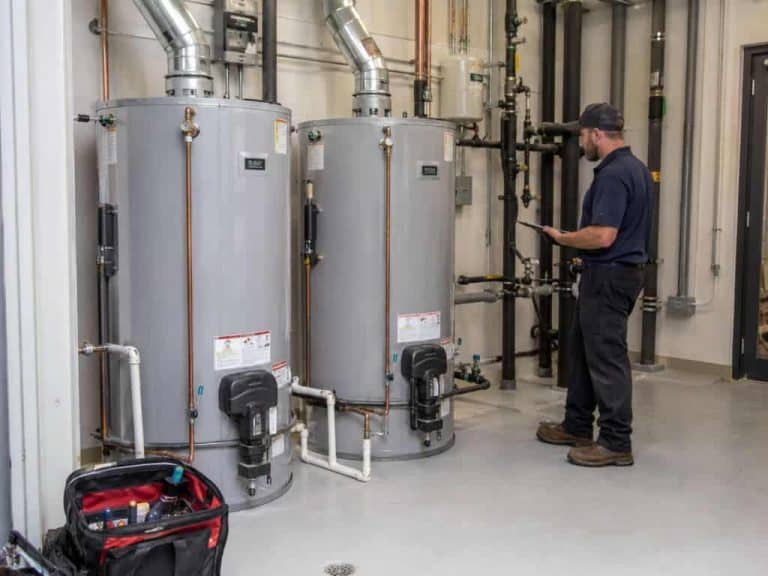
There is also the issue of building routine. If hot water is mission-critical at certain hours, your plumber needs to know that before the work begins. In my experience, some of the smoothest projects happen when the owner or property manager can clearly explain the daily rhythm of the building. Not every contractor asks the right questions up front, so it helps if the customer volunteers the practical details. Which restrooms serve the most traffic? Is there a tenant that opens earlier than everyone else? Are janitorial crews on site overnight? The answers shape scheduling.
This kind of coordination may sound minor, but it separates a technically correct installation from a truly well-managed one. Commercial clients usually remember the second kind.
Watch the water bill if the failure involved a leak
A failing water heater or related plumbing issue can sometimes show up on the utility bill before the system fully quits. In Boerne, the city’s utility rules allow a one-time water-usage adjustment for a plumbing leak if consumption is at least 50 percent above the customer’s yearly average. The customer must provide a repair bill or parts receipts. In certain leak cases between December and March, sewer charges may also be adjusted.
That does not mean every water heater problem qualifies, and it does not replace proper diagnosis. But if your replacement was tied to a leak event and your water usage spiked, it is worth keeping good records and plumbers reviewing the city’s requirements promptly. The important detail is documentation. When owners are dealing with an emergency, paperwork often gets lost in the shuffle. Save invoices, receipts, and service records. Those documents can matter after the plumbing crew leaves.
I have seen owners focus so hard on restoring service that they forget the billing side until much later. By then, the details are harder to reconstruct. If the project involved water loss, make recordkeeping part of the repair process, not an afterthought.
How sewer and drain conditions can complicate the bigger picture
Commercial plumbing systems do not operate in isolation. Boerne’s public works specifications include sanitary sewer infrastructure and mechanical cleaning requirements, which is another reminder that the city treats sewer-related work within a formal standards environment. On the ground, that matters because a property dealing with hot water issues may also be dealing with drainage or sewer maintenance concerns elsewhere in the building.
That does not mean the two are always connected directly. It means a property with one neglected plumbing area often has others. If a site has a history of backups, recurring drain calls, or deferred maintenance, those conditions can affect scheduling, contractor access, and overall project efficiency. A professional commercial plumber looks at the site as a system. They know when to keep a project narrowly scoped and when to advise the owner that related plumbing conditions deserve attention soon.
That kind of honesty is useful. It helps owners prioritize without pretending every issue is an emergency.
What to ask before approving the job
Before you approve commercial water heater installation or replacement in Boerne, the conversation should feel clear, not vague. You should understand whether the work will be permitted, whether the contractor is properly registered for city work, and how the plumbing company is operating under Texas licensing rules. You should also know what sort of downtime to expect and whether any surrounding plumbing conditions may affect the final scope.
Here are the questions that usually matter most:
- Will this project require city permitting and inspection in Boerne?
- Is the contractor properly registered for work inside city limits?
- Who is responsible for the plumbing work under Texas licensing rules?
- What building shutdowns or service interruptions should we plan for?
- Are there any visible related plumbing issues that may need attention during replacement?
That short list is often enough to expose whether a contractor is organized or just trying to get in and out. Clear answers are a good sign. Evasive ones are not.
A realistic view of timing and expectations
Commercial owners naturally want simple timelines. Plumbers want to give them. The truth is that timing depends on the existing conditions, the building, the city process, and what the old installation reveals once work begins. A direct replacement in an accessible location is one thing. A project that involves code corrections, difficult access, or related plumbing issues is another.
The useful mindset is to expect a professional process rather than a magic turnaround promise. Good contractors can often move quickly, but the best ones do not pretend every commercial replacement is identical. They leave room for inspection steps, permit coordination, and site-specific realities. That is not padding. That is experience talking.
When a contractor promises absolute simplicity on a commercial plumbing job before seeing the site, I get cautious. Water heaters look simple from the hallway. They rarely stay simple once the utility room door opens.
Choosing the right kind of local help
A lot of Boerne business owners prefer hiring close to home, and that makes sense. Local plumbers are more likely to understand the pace of area projects and the city’s oversight environment. Still, local alone is not enough. The right fit for a commercial water heater replacement is a plumbing company that can combine licensing, city compliance awareness, and practical commercial judgment.
That means they should be comfortable with installation and replacement work, but also with the bigger plumbing context. Boerne-area companies publicly market services such as leak detection, leak repair, commercial plumbing, sewer cleaning, hydro jetting, and snaking for a reason. Commercial properties are rarely one-issue buildings forever. You want a plumbing partner who can see around corners a bit, someone who can handle today’s water heater problem without missing tomorrow’s plumbing problem that is already taking shape.
Owners and managers can help by approaching the job with the same mindset. Do not shop only for a box swap. Shop for a sound result.
After the new unit is in place
Once the installation is complete, the immediate goal is steady operation. For commercial properties, that means more than hearing that the heater is on. It means confirming the building is getting reliable service where it needs it, at the times it needs it. If staff or tenants had been complaining before, this is the time to check whether those complaints actually stop.
Keep all job records together, especially if the replacement was tied to a leak or unusual water usage. Save permits, invoices, and any related receipts. If your property manager changes later, those records may be the only clean history of what was done. Building memory disappears fast when paperwork is scattered.
It also helps to pay attention to the first billing cycle after replacement. A stable system should not leave you guessing. If the project was done because of a leak-driven spike, compare usage carefully and make sure the numbers return to a more normal pattern. Commercial plumbing problems often announce themselves on the bill before they announce themselves in the hallway.
The practical bottom line for Boerne businesses
Commercial water heater installation and replacement in Boerne is not just a matter of picking equipment and setting an install date. It sits inside a regulated local process, under Texas plumbing licensing rules, and within the daily demands of a working commercial property. That is why the best projects are handled deliberately. The owner understands the business impact. The plumber understands the system and the city. The paperwork is handled correctly. The installation solves the actual problem, not just the most visible symptom.
If you approach it that way, a water heater replacement local plumbers becomes manageable. If you treat it like a rushed appliance swap, it can become the kind of job that keeps costing money long after the truck pulls away. For most businesses, that difference is everything.